
Beyond Policy and Code: What I Learned at Harvard's GovLab
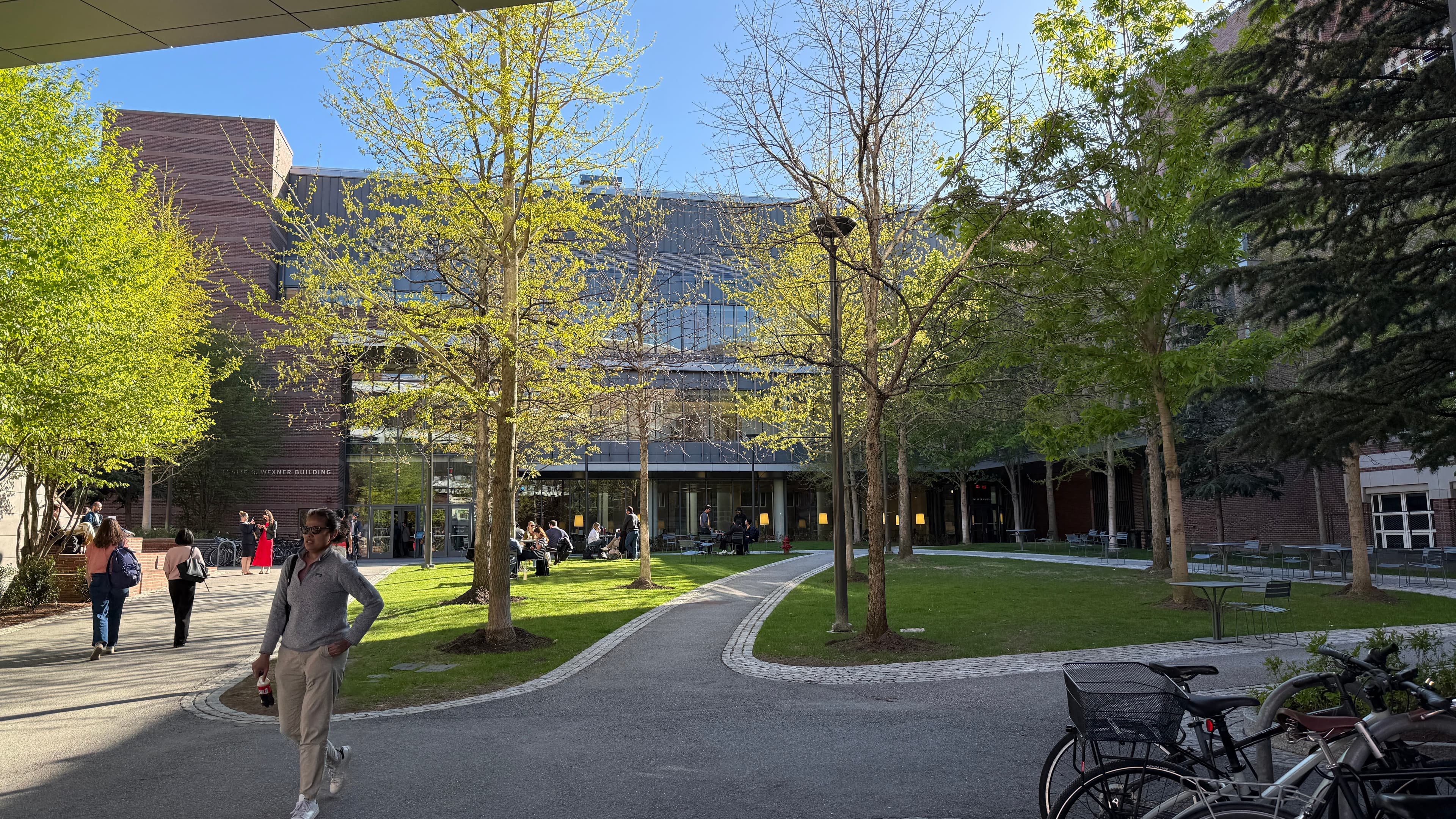
I walked into the Harvard Kennedy School building without any expectation that I'd be thinking about it for weeks afterward. I was there to observe, to understand how student founders think about government technology, to see if there was anything I could learn from watching people pitch ideas in a room full of policy experts and venture capitalists.
What I didn't expect was to leave thinking more about the people than the ideas.
The Thing About Being There
There's something different about being in a room where people are genuinely excited about building things. Not excited about the idea of being excited, but the real kind—the kind where you can see the fatigue in their eyes and the conviction in their voices at the same time.
I got to the pitch day early. The energy wasn't the polished startup conference vibe. It was the energy of people who had been working in a basement or a dorm room for ten weeks, who had talked to users, who had built something that didn't work and fixed it. They weren't there to perform. They were there because they believed in what they were building.

Nathan Georg
Chair, Governance Lab
Harvard Kennedy School
Nathan was the first person I connected with. He's a sophomore at Harvard studying economics and statistics—the kind of person who, when they tell you they're running an incubator, you believe them immediately. There's no pretense. He talked about GovLab the way someone talks about something they're genuinely invested in, not just a line on their resume.
He explained what GovLab actually is: a 10-week program where student founders take an idea, pressure-test it against policy constraints and market realities, and end up with either a pitch-ready product or clarity that they need to pivot. The curriculum reads like a masterclass in how government technology actually works—from writing code to talking to customers, from securing government contracts to understanding regulation.
But what struck me more was how he talked about the community. These weren't competitive founders trying to out-idea each other. They were peers trying to solve problems that matter. Big difference.
When Someone Talks About AI Governance

Paulo Carvão
Senior Fellow
Mossavar-Rahmani Center for Business and Government
Paulo walked into the room with the kind of presence that comes from having thought deeply about hard problems. He's the Entrepreneur-in-Residence at GovLab, and he researches AI regulation—which, in 2026, means he's thinking about some of the most consequential questions in tech policy.
We talked briefly after his talk on "Ethics of Deploying AI," and the conversation went places I wasn't expecting. I had recently come back from an IBM conference in Las Vegas where I'd won a hackathon and gotten called to see AI agents being demoed by some of the smartest people in the space. I was in my head about what AI was going to mean, how it would reshape everything.
Paulo asked questions that forced me to think about the governance side of that. Not just "what's technically possible," but "who decides what's allowed, and on what timeline?" It's the kind of conversation that feels obvious in retrospect but is easy to miss when you're deep in the technology.
Three Founders, Three Different Visions
The pitches started, and I got to see the actual companies these students had built over ten weeks.
One team was working on an operating system for next-generation AI advancement. I know how that sounds—ambitious to the point of absurdity. But they were serious, and when they showed their approach, it made sense. They had thought about scheduling, about resource allocation, about how to orchestrate multiple AI models. It was the kind of thing that made me think about Spike Jonze's Her—not the romance part, but the vision of an OS that doesn't just run software, but that thinks.
Funny enough, I had watched Her in my Operating Systems course at Boston University. My professor showed it to us, and we had this really good discussion afterward about what an intelligent operating system might actually look like. I was cynical at the time, thought the movie was more fantasy than anything. But watching this team pitch their approach to building an OS that could orchestrate AI models made me reconsider.
The second team was building an operating system for quantum computing. They showed some of the kernel code they'd written, and while I had some thoughts on their language choice, I couldn't help but appreciate the audacity. Quantum computing is hard enough to understand. Building an OS for it is a different level of commitment. They had the skills, and more importantly, they had thought through the actual problems.
The third pitch was about cookies. Specifically, about what happens to cookie data when users reject tracking. I won't pretend I understood their entire business model—it was complicated in a way that suggested they had figured out something clever. But what was interesting was watching the judges react. There was a lot of chatter afterward. This wasn't a "nice idea" pitch. This was a pitch where people who understand regulation and policy were seeing something they thought could actually work.
What Nobody Tells You About Pitch Day
Here's what I learned: pitch day isn't really about the pitches.
It's about seeing how founders think under pressure. It's about noticing who asks follow-up questions and who just applauds. It's about the conversations in the hallway after someone presents—the ones where a founder explains what they really meant, and an investor or advisor tells them why they're right or wrong.
I spent more time in those conversations than in the formal pitches. I met founders who were skeptical of what they were building but committed to testing their skepticism. I met advisors who didn't have all the answers but asked questions that made you realize if you did have the answer, you'd have something real.
And I realized something about myself: I came in as someone who works in tech, thinking I'd be the one with knowledge to share. But being in a room with people who had spent ten weeks solving actual government problems—that was humbling. Not in a bad way. In the way that makes you go back and work harder.
The Real Education
What Harvard got right with GovLab isn't the curriculum or the pitches or even the network of mentors. It's that they created a space where people could spend ten weeks learning what questions they should ask. Founders realized that policy isn't an obstacle to build around—it's a fundamental part of the problem you're trying to solve. Advisors realized that students can think in ways that experienced people sometimes forget.
I left that building thinking about something Paulo said: governance is about people making decisions. Technology is just a tool for doing that better. If you build technology without understanding the people and the decisions they need to make, you're just making something that looks impressive but doesn't work.
As an AI/ML engineer, that hit different. I've spent time optimizing models, reducing latency, improving accuracy. All real things. But watching student founders grapple with "how do I make sure this thing doesn't cause harm?" and "how do I sell this to someone who has never used software like this?"—that's the missing piece in most technical education.
Why This Matters
The reason I'm writing this isn't because pitch day was dramatic or because someone raised a million dollars or because there was some dramatic founder-advisor matchup. It's because I watched what I thought was a tech problem reveal itself to be a people problem. And I watched people figure that out over ten weeks and get excited about it.
That's rare. That's worth paying attention to.
If you're building in government technology, go visit a place like GovLab. Not to recruit, not to pitch your services. Go to understand how the smartest people you know think about the problems on the other side of your domain. It'll change what you think is possible.
More field notes? Subscribe.
Get notified when new entrepreneur insights and field notes are published. Real lessons from real founders.